
Recent Posts



Most Read
Preparing A Nervous Dog For Kennel Boarding
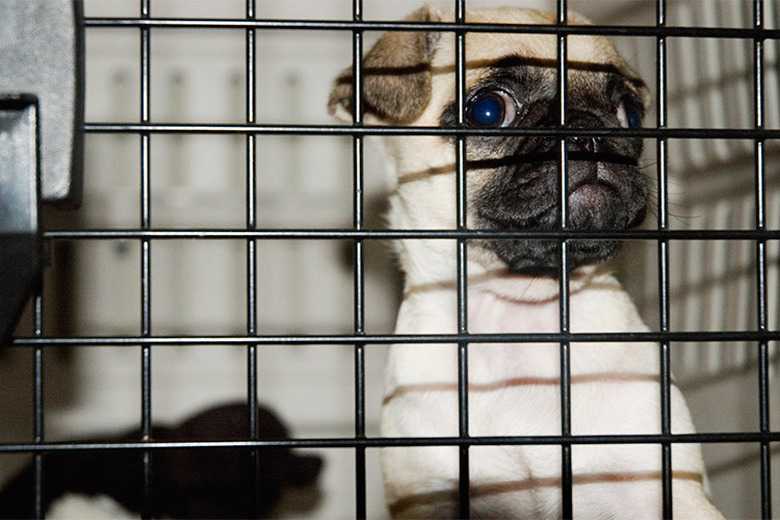
DogsDog TrainingPreparing A Nervous Dog For Kennel BoardingByCuteness TeamApr 21, 2014 3:59 am ESTIf you've never kenneled your dog before, it can be a nerve-racking experience, especially if you have a nervous pup. Neither of you know exactly what to expect, and the prospect of separation can be difficult. In order to make kenneling a positive experience, preplan and prepare for the event. If you are kenneling multiple dogs who get along well in close quarters, consider kenneling them together to create a sense of familiarity that will reduce stress and anxiety.Choosing a KennelYour dog can pick up on your anxiety, and if you're nervous about kenneling, he will be extra jumpy too. Make sure you select a place that will give you peace of mind. Visit and interview several different kennels and boarding facilities and look for a location that provides the type of care you want your dog to have. Be honest about your dog's anxiety and ask kennel staff how they handle skittish animals. Ask questions about how often your dog will be fed, walked and played with and whether a vet is on staff. Request a tour to see different kennel sizes and to observe the interaction between boarded animals and kennel employees.Crate Train at HomeCrate training in your home will not only make the commercial kenneling experience less scary, it will also help you with obedience training. When you crate train a dog, you establish his crate as a place of safety, comfort and retreat, and you also ensure he is safe and out of trouble if you're away. Crate training in a familiar environment will help prepare you and your pup for when you must leave him in a boarding kennel for an extended period of time. This can reduce his anxiety and nervousness about being contained.Do a Trial RunIf you're kenneling a nervous dog for the first time, it's better for everyone if the first stay is a short one, no more than a day or two. Introduce your dog to the kennel you plan to use before he has to make a lengthy stay. Start with an overnight visit, then extend it to two or three nights and gauge how well your dog does. Ask the kennel staff for honest feedback about your dog's anxiety and nervousness during his stay. If he is highly fearful and doesn't eat, drink or interact, you might want to ask your vet about an anti-anxiety medication, or forgo kenneling altogether and employ a pet sitter instead.The Kennel StayPack a doggie bag for your pup when he goes to the kennel. Include his bed, favorite blanket or toys, and bring along his own dog food so he won't have to deal with stomach upset from eating an unfamiliar brand. Make it feel like an exciting adventure by being upbeat about taking your dog to the kennel, rather than nervous and tearful, even if that's how you're feeling inside. Showing too much emotion will not make the transition easy for you or your dog. Say a short good-bye and ask the staff about calling in on a regular basis so you can ensure your dog is doing well while you're away.By Lisa McQuerreyReferencesUC Davis Veterinary Medicine: Choosing a Boarding FacilityPerdue University: Keep the Family Pet Happy and Healthy While on VacationAbout the AuthorLisa McQuerrey has been a business writer since 1987. In 1994, she launched a full-service marketing and communications firm. McQuerrey's work has garnered awards from the U.S. Small Business Administration, the International Association of Business Communicators and the Associated Press. She is also the author of several nonfiction trade publications, and, in 2012, had her first young-adult novel published by Glass Page Books.
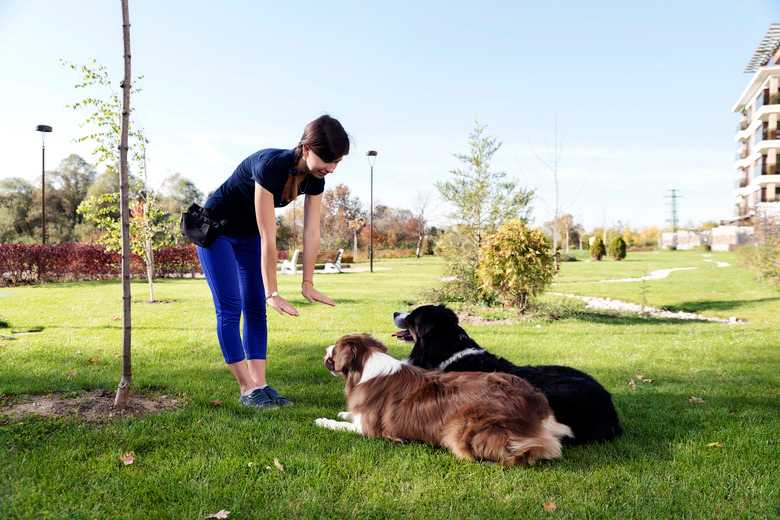
How To Train A Dog With German Commands
DogsDog TrainingHow To Train A Dog With German CommandsByAdrienne FarricelliUpdated Sep 17, 2021Whether you own a dog breed of German heritage or you simply like the sound of German commands, training your dog to understand Deutsche can be a mutually enriching experience. Your first step entails choosing which commands you wish to teach; your second step is learning to pronounce them correctly so that you can speak the words confidently without confusing your dog. After that, it's your dog's turn to learn that from now on "sitz" means sit in German.jarih/iStock/Getty ImagesClarity above allClarity above allA major benefit of training commands in German is that they're easily distinguishable from English. For instance, dogs often hear the words "stop," "come," or "sit" in our everyday conversations out of training contexts, which can be confusing. German commands are clear, distinct, and most likely are commands nobody else will replicate to confuse your dog. That's one reason some law enforcement officers like to stick to their imported dog's native language, whether it's German, Hungarian, Czech, or Dutch.Start dog training earlypayamona/iStock/GettyImagesStart dog training earlyThe best way to train German commands is to start with a puppy. A puppy is a clean slate and can be easily introduced to commands in any language. Simply introduce the German commands as you would with English commands, teaching "sitz" instead of sit. With older dogs who have been trained with English commands, things can get a bit tricky. You'll need to allow time to acknowledge the new commands and associate the desired behaviors of the old commands with the new ones.Lesson 1: Basic commandsLesson 1: Basic commandsYour dog's basic commands are standard commands taught in obedience classes including sit, down, stay, come, and heel. "Sitz" is the German command for sit and it's pronounced just as you read it. "Platz" in German (pronounced "plats") means down. "Bleib" (pronounced "bly'b") means to stay in German. "Hier" (pronounced "hee-er") as the word implies, means come here, and "fuss" (pronounced "fooss") means heel.Lesson 2: Advanced commandsLesson 2: Advanced commandsThese aren't your ordinary commands, but they're helpful if you're planning to do advanced training. For instance, if you're doing agility, you may be interested in training "hopp" (pronounced hup), which means jump, and if you're doing search and rescue, you may be interested in training "gib-laut" (pronounced gib-laout) to train your dog to bark to alert you of his findings.Lesson 3: Training in GermanLesson 3: Training in GermanOnce, you have chosen which commands you want to teach and can pronounce them, it's time to train your dog. Focus on one command at a time. Start by saying the new German command. If you want your dog to learn both, you can follow it with the known English command. For instance, say "platz" followed by "down" and then praise and reward your dog for complying. Repeat multiple times in different environments. When your dog gets it, give plenty of praise.Lesson 4: Testing the watersZbynek Pospisil/iStock/GettyImagesLesson 4: Testing the watersIf your dog already knows English commands, use both the German and English until he makes the association. When you think your dog is ready, you'll want remove the old command so you can rely exclusively on the German one. A good time to do this is when your dog responds to the German command even before he hears the English command.Next, test the waters by saying the German command alone to see if your dog complies. If he does, praise lavishly and reward your dog. If your dog has trouble, try practicing more using both commands.Remember that dogs don't learn language the way that we do and therefore aren't limited in the number of commands they can learn in different languages. It is up to you to be patient and consistent to teach the meaning and expected behavior associated with new words, regardless of the language. They don't know whether you're speaking English, German, or Italian. The main thing they respond to is the sound of the word and the consistency in which it's used.ReferencesDr. P's Dog Training University of Wisconsin Stevens Point: Common Dog Commands in Several LanguagesAmerican Kennel Club: How Much Language Do Dogs Really Understand?Susan Garrett and Say Yes Dog Training: Dog Training Question ~ When Do I Add a Cue?
How Do I Remove Dried Dog Urine Stains From Carpet With Vinegar?
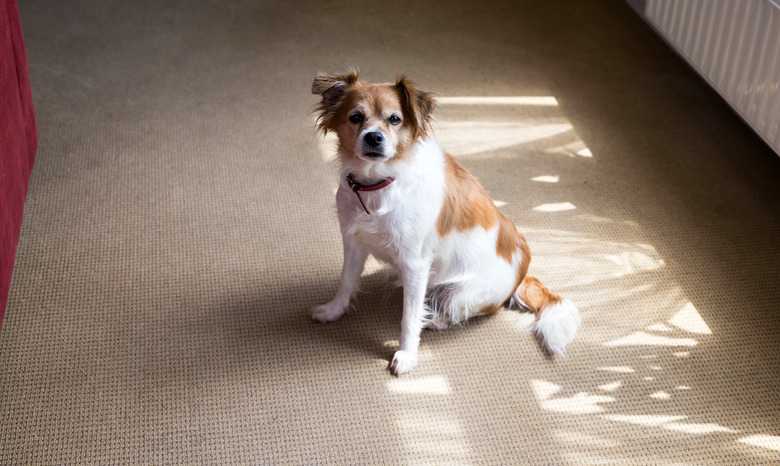
DogsDog TrainingHow Do I Remove Dried Dog Urine Stains From Carpet With Vinegar?ByMichelle MileyUpdated Aug 12, 2019cerro_photography/iStock/GettyImagesAccidents happen, and they tend to do so with more frequency when you have children, pets, or both. Even a well-trained and completely housebroken dog can have an accident from time to time, and that means unsightly and smelly stains on your carpet. If a dog urine smell greets you when you return home, you can neutralize the odor and freshen things up with some vinegar and baking soda.Catch them in the actCatch them in the actIt's much easier to remove urine from carpet when it'sfresh.If you're dealing with a stain rather than a puddle, it's probably too late for that. If you're lucky enough to catch the spot when it's still wet, however, quickly blot the stain with paper towels to soak up the urine. Blot the carpet but don't rub it, as doing so will only spread the urine around.DIY dog urine stain removerDIY dog urine stain removerAfter blotting the carpet dry or discovering the stain too late for that, make ahomemade cleaning solutionto remove any remaining urine and its odor. To do so, mix half water and half white vinegar in a spray bottle. Vinegar neutralizes the smell of urine just as effectively as commercial cleaners and costs much less.Resoak the stainResoak the stainTo remove any lingering urine odor, spray your vinegar cleaning solution liberally on the carpet. You want the vinegar to go everywhere the urine did, including down to the matting under your carpet if necessary. Getting it there means applying it liberally, soaking the carpet until it is wet once again rather than just slightly damp.Scrub it outScrub it outFor a deep clean, grab a smallscrub brushand use it on your wet carpet. Scrubbing in small circles, apply as much pressure as you can without damaging the carpet fibers. The scrub brush will remove any remaining urine while working the vinegar solution into the carpet fibers. When you're done scrubbing, blot the carpet dry again with some paper towels or a clean cloth.The finishing touchThe finishing touchVinegar is an excellent odor remover, but it never hurts to go the extra mile when getting rid of unpleasant odors. After cleaning your carpet, allow it to dry thoroughly and then sprinkle somebaking sodaover the spot. Let the baking soda sit for at least 15 minutes before vacuuming it up.Although it's easy to understand why you don't want to invest hours in cleaning up a pet accident, be patient when waiting for your carpet to dry. Baking soda turns into a clumpy mess when it gets wet and is difficult to clean up. Make sure your carpet is 100 percent dry before applying the baking soda, even if that means waiting a few hours.Don't get steamedDon't get steamedSteam cleaners are usually a great way to keep your carpet and upholstery clean, but don't reach for yours when your pet has an accident. The heat generated by a steam cleaner can bond the protein in the urine to the fibers of your carpet, fusing them together. Once that happens, the stain and its smell are permanent residents of your carpet. No matter what the steam cleaner commercials say, you shouldnever apply heatto a pet stain.General tips and tricksGeneral tips and tricksBefore using vinegar or any other cleanser on your carpet, make sure youtest it in an inconspicuous area.If the test area becomes discolored, discard the cleaning solution and try another. Remember too that the colors in paper towels and rags aren't always colorfast. To avoid dye transfer, always use a white paper towel or cloth to clean pet stains.ReferencesThe Bark: Clean Carpet Pet Stains NaturallyAngie's List: How to Get the Smell of Pet Urine Out of CarpetDinkyDogClub: A Homemade Mixture for Cleaning Dog Pee Out of Your CarpetThe Humane Society of the United States: How to Remove Pet Stains and Odors
How Can Guide Dogs Help Blind People?
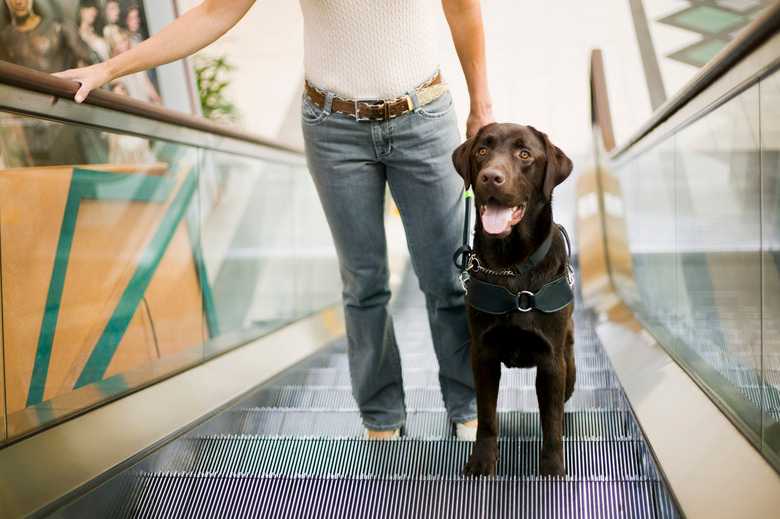
DogsDog TrainingHow Can Guide Dogs Help Blind People?ByJulie Thomas-ZuckerUpdated Mar 23, 2021Jim Craigmyle/Stone/GettyImagesA guide dog can help a blind person in many ways, beginning with giving unsighted people independence. Many blind people can't get around without the help of a well-trained guide dog. As with most types of service dogs, guide dogs go through extensive training. It takes between 2 and 5 years for a guide dog to be ready to be matched with a disabled person. Training includes basic obedience and service dog training. Providing protection and companionship are other ways these dogs help blind people.Guide dog trainingGuide dog trainingService dog training takes a minimum of 2 years to complete. In addition to basic obedience, the dog learns how to move forward and to turn right and left on command. More advanced commands include learning how to stop before crossing a street, leading its blindfolded handler around overhangs or other obstacles safely, and retrieving dropped objects. Also, during this time the dog learns only to guard its handler. After successful completion of training, the dog is matched with a blind person.Despite their extensive abilities at the end of the training, there are some things that guide dogs cannot do. They cannot be expected to establish a route to a new location, nor can they read traffic signs or signals. They take direction from their handlers and offer warnings of any dangers or obstacles along the route.Under the Americans with Disabilities Act, establishments are not allowed to refuse service to individuals with a service animal. While all guide dogs must be exceptionally well trained to fulfill their role, certification is not required. Many guide dog schools will provide an identification card or certification to help minimize hassles, but these do not offer official legal protections for the handler. Service dogs are legally allowed to enter establishments unless they are posing a real danger. Some states may have additional laws pertaining to guide dogs and other service animals.Types of service dogsJupiterimages/Stockbyte/Getty ImagesTypes of service dogsAny well-trained dog can become a guide dog, although some common guide dog breeds for the blind include Labrador retrievers, golden retrievers and German shepherds are the most popular breeds. Standard poodles are another popular option, especially for individuals who have allergies. This is mainly because they have a strong instinct to assist their owners.Guide dogs must be in good health and free from any genetic health conditions. They must also have a personality that fits the job. Characteristics to look for in guide dogs include a high level of confidence, friendliness, biddability and adaptability. Trainers also look for dogs that are focused and not easily distracted. Another important requirement for a guide dog is that it be large enough to be fitted with a harness and leash. The blind person must be able to reach the harness comfortably.Good human candidatesBoris Djuranovic/iStock/Getty ImagesGood human candidatesGuide dogs serve blind people as well as individuals who are visually impaired. Handlers too must be trained. Much to the surprise of many of them, they have to learn how to walk again, as oftentimes, blind persons will shuffle along and not move at a speed that a dog can comfortably walk. As they gain confidence in their partnership, they learn to move at a pace better suited to the dog.Dogs are matched with people based on their specific needs, personalities and lifestyle. Some blind people may not walk enough to keep their dogs happy and healthy, so activity level is an important consideration when pairing guide dogs with their handlers. They must attend a training school as well and pass competency tests. This allows the dog and handler to build a trusting relationship and practice realistic scenarios.ReferencesAmerican Kennel Club: 7 Things You Probably Didn't Know About Guide DogsThe Seeing Eye: What You Should Know About Service Animals In Public PlacesService Dog, Therapy Dog & Emotional Support Animal: How are Guide Dogs Trained to Help the Blind?Guide Dogs for the Blind: Guide Dog TrainingGuide Dogs for the Blind: Get a Guide DogGuide Dogs for the Blind: FAQs
How To Tell A Goldfish's Age
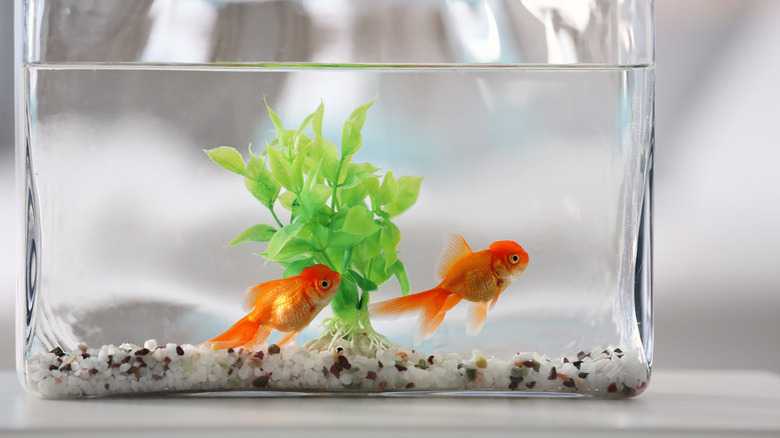
Other Cute AnimalsFishHow To Tell A Goldfish's AgeByA. A. RileyUpdated: Dec. 10, 2024 5:23 pm ESTLiudmila Chernetska/iStock/GettyImagesUnlike the destiny suffered by so many other carnival goldfish, the life of Tish the goldfish stretched for a whopping 43 years. Although the only official way to calculate the age of your goldfish is by examining his scales under a microscope, there are visual clues to goldfish age.Size and goldfish ageAlthough most species of aquarium fish can be aged based on how long they are, this doesn't always hold true with goldfish. She's unlikely to reach her maximum size if you keep her in a 20-gallon tank, especially if she shares the space with goldfish tank mates. That's because growth-inhibiting hormone builds up in the environment, limiting her size.How big she gets also depends on how she was treated early in life. Goldfish breeders and pet shops sometimes keep fish in overcrowded tanks, stunting their growth from the start. If you're raising fry yourself, you can influence maximum growth by providing quality nutrition without overfeeding, giving her enough space, and performing frequent water changes.Juvenile vs. adult goldfishDuring their first week of life after hatching, the fish grow from about 4.5 mm (3/16 inch) to 5 mm. They average increasing their length by 27 percent per week during the first eight weeks of life, nearly doubling their weight weekly. Look for the largest growth spurts during week two and three, when fish increase in size by 40 percent and 57 percent, respectively.At less than 8 weeks old, you can easily determine goldfish age since they don't have fully developed fins. At 1 week of age, the pectoral fins are most obvious, but they also have a small medial fin running from where their dorsal fin would start around the end of their tail to the vent area. The tail fin develops in the second week, and dorsal fins during week three. By 1 month old, their dorsal fin is well developed, and the anal and ventral fins appear. All fin development is complete by 5 weeks old, when the fish is about 11 mm (5/8 inch) long.By the fifth week, features such as protruding eyes will start becoming obvious. The goldfish will lengthen to 1.5 to 2 inches by 6 months old and become an adult goldfish at the age of 1 year at approximately 3 inches long. Given optimal water parameters and nutrition, a goldfish will continue growing for the first seven years of life until he reaches about 12 inches long.More about goldfish ageWhen your fish is an adult goldfish in her prime, the only way to tell her age is through her scales. Tiny rings develop on the scales for each year of life, somewhat like a tree ring. The process involves removing 10 scales from your goldfish's body and examining them under a microscope. Because they can be tiny on small fish and rings are present primarily in fish who endure temperature extremes outside, you should consult your veterinarian before considering this method.Goldfish color can also be a clue to age. Young fish are more of a bronze color. Goldfish in the prime of life are orange (unless they're a black moor, marble, or other color variation). Look for signs of your goldfish entering old age, such as fading color. Some goldfish even become silver or white in their later years, much like humans getting white or silver hair.
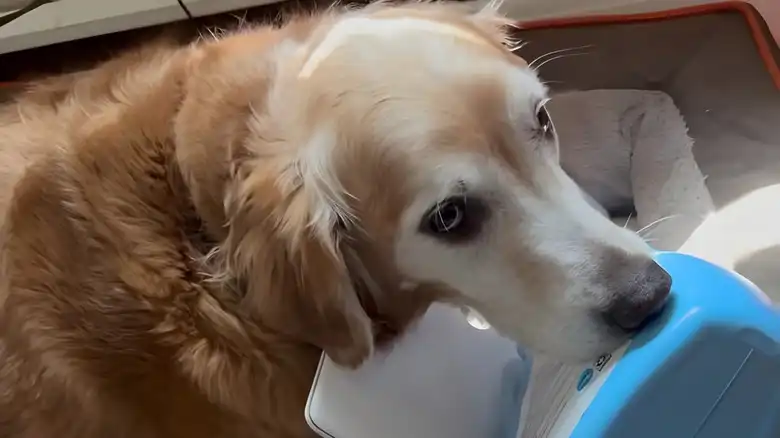
Senior Golden Retriever Shows No Remorse After Stealing Items From Around The House
DogsDog BehaviorSenior Golden Retriever Shows No Remorse After Stealing Items From Around The HouseBySheri RadfordDec. 29, 2025 12:25 pm ESTlifewithduke2025 / TikTokWhat do a framed print, a hardcover book, a laptop computer, a 12-pack of toilet paper, and an empty juice jug have in common? They're all items that 11-year-old golden retriever Duke has stolen from around the house and dragged back to his bed, along with a teapot, a lamp, a laundry basket, an empty pizza box, a bag of potatoes, an 18-pound turkey, and countless other random items.In a delightfully charming TikTok video that's been viewed more than 7.8 million times, Duke is seen carrying a framed print that's almost as big as he is while his owner, Cathy Hoyt, exclaims in dismay about her beloved "Dukie" dragging more items to his bed. "I love how all goldens use their retriever instincts to just commit robbery constantly," one viewer commented. "Justice for Duke. He's trying to become a home decor influencer," another joked.Hoyt is constantly perplexed by Duke's thieving. "The behaviors were a bit startling because we had never had a dog like this," she told The Washington Post in October 2025. "He is also a 'counter surfer,' so you can't have clutter on your counter." Duke always appears supremely chill on camera, as if he can't understand why anyone might be perturbed by the dartboard, shoe, lantern, or giant fake tarantula hanging out of his mouth.Duke the golden retriever's search for a feeling of securitylifewithduke2025 / TikTokSadly, this golden retriever's, well, retrieving may come from his lived experiences. "Duke's past has been erratic. He has been shuffled throughout three or four homes within the same family," Cathy Hoyt shared with The Dodo in October 2025. She and her husband took Duke home in 2024 after their senior golden retriever, Charlie, died. "We love taking in seniors because we know it's harder for them to find loving homes," Hoyt added to The Washington Post. It's true that older dogs often take a long time to get adopted, but adopting an older dog instead of a puppy can be a wonderful experience for both dog and owner — and adopting the oldest dog in the shelter can be the most heartwarming of all. This is especially true because shelter surrender is worse for a dog than you may have thought.Hoyt wonders if, after Duke spent so many years bouncing around between people and homes, he now clings to his random items to feel more secure. Resource guarding usually happens with items that a dog perceives as high-value, such as food, toys, and beds, so Duke's behavior is unusual. But one viewer of the TikTok video shared a story that backs up Hoyt's theory: "So, when I was younger, I would put all of my stuffies inside of my sleeping bag every night just in case there was a fire, I would be able to save all of them. It stemmed from anxiety. I wonder if this is what's driving sweet Duke to bring things to his bed."
Everything To Know Before Adopting A Duck As A Pet
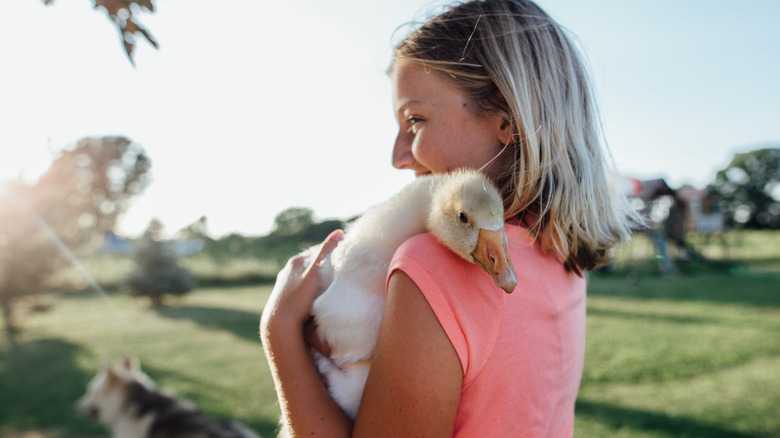
Other Cute AnimalsBirdsEverything To Know Before Adopting A Duck As A PetByCynthia AnayaJan. 31, 2025 11:25 am ESTCavan Images/Getty ImagesWe may receive a commission on purchases made from links.While a bit unorthodox, ducks can be kept as pets, legally, in most states. Perhaps you've wanted a pet duck ever since you saw Joey and Chandler with one on "Friends," or maybe you just always enjoyed feeding ducks as a child. Ducks can show affection and be entertaining as well. Whatever the reason, ducks can make good companions and offer some of the same benefits that dogs and cats do. However, you should consider the daily activities, requirements, and restrictions associated with adopting a duck as a pet, all of which could pose an inconvenience.On a positive note, keeping ducks fed is as easy as keeping a more traditional pet fed; you can purchase a bag of duck feed pellets from pet stores and online retailers, such as Mazuri Waterfowl Layer Food for Ducks. Ducks also feed on grass, including weeds, and rid yards of pests, so they can serve as great lawn-maintenance animals. Some owners consider this type of waterfowl high-maintenance and challenging to care for because of their needs, while others feel the opposite. With this in mind, it's best to consider all variables of ownership before bringing your own personal Donald or Daisy home to be part of your family.They can be messyLinas Toleikis/Getty ImagesAll pets can have bowel accidents in undesired places, but their water bowl is not one of them for most. Ducks, on the other hand, naturally defecate in water, even if it's the same water they bathe in and drink. This means that whatever drinking water you have prepared for them might contain their droppings and need to be replaced regularly. Ducks also enjoy playing in mud and dirty water puddles, so by the end of the day, they could be covered in feces-tainted water and dirt.It's also important to note that ducks excrete waste frequently — about every 10-30 minutes — which equates to roughly 100 times a day. Since they don't spend all their time in water, you'll find their droppings not just in their water containers but in their enclosure and your yard. The good news is, duck waste makes good fertilizer, due to its nutrient-dense nature. You just need to compost it first before applying it to any plants or soil.Some ducks can be boisterousHam patipak/ShutterstockYou might find the sounds of ducks quacking at a park or while you're kayaking down a creek harmless and maybe even appreciated. When the quacking happens in your backyard throughout the day, however, you might not feel the same way about it. Your neighbors might also have an issue with this, especially if the quacking wakes them up.Although all ducks vocalize in some way, some species and breeds are noisier than others. Mallard ducks, particularly the females, quack often to communicate in different ways. One duck owner on the Reddit subreddit r/ducks reported that their female mallard quacked constantly while in her large enclosure, despite being well-fed and having humans interact with her. Female call ducks, as their name implies, are also known to vocalize loudly and frequently.At the quiet end of the "quack spectrum" are Muscovy ducks. Instead of quacking, this species makes hissing and cooing sounds to communicate. These sounds will likely be too quiet to bother you or your neighbors. You may not even hear them unless you're standing nearby.They should be kept contained outdoorsWirestock Creators/ShutterstockUnlike furry indoor pets, ducks should spend most of their time outside in their natural habitat. You can bring them inside on occasion, but they thrive best and should live in an outdoor environment. Living in the great outdoors meets their natural instincts and behaviors that a standard indoor environment can't.Another reason to keep your pet duck outdoors is their frequent bowel movements and water activities. Ducks love to swim and play in water, and remember, they also poop in water — and poop often. You probably won't want them leaving droppings all over your carpet, so keep them outside instead and ensure they have water in the form of a pond, kiddie pool, or tub to play and bathe in. Have a separate, smaller water source available for drinking that's deep enough for them to fully cover their heads.It's also recommended to have a fenced-in yard, but more importantly, ducks need a pen with netting or some other type of predator-proof shelter with a roof. When you let them out of their enclosure to play, only do so while you're home and able to keep an eye on them. They should be placed in a roofed shelter when you can't watch them, as well as overnight.They crave companionshipMatthias Rohrberg/Getty ImagesDucks can be compared to humans in some ways, including their desire for companionship. They enjoy socializing with other ducks and can get lonely without other feathered friends to quack, swim, and waddle with. With that in mind, it's best to adopt a pair of ducks (or more!) or adopt a second shortly after bringing the first home if a pair isn't immediately available. The ducks can be of the same or different breed or species.Another option is to complement your pet duck with other birds, such as geese or chickens. All of these birds can generally share the same enclosure without any issues. Certain dogs can also become your duck's sidekicks. However, there are some caveats. Some dogs — especially large ones — see ducks as prey and may want to chase or harm them. This behavior can be avoided by adopting a puppy and duck at the same time, choosing a small dog that weighs under 10 pounds, and/or training. In any case, you should closely monitor all initial interactions between the two animals.Caring for them is time-consumingFertnig/Getty ImagesSome pets don't require much beyond food, water, toys, comfortable bedding, the shelter of your home, and waste cleanup. At the end of a typical day, you might end up spending all of two minutes on feeding and cleanup, if necessary. Caring for ducks, on the other hand, requires a lot more time. One owner on Reddit's r/pets shared their daily routine for caring for their two ducks, totaling 40 minutes every day. They spend 20 minutes in the morning and 20 minutes in the evening. Their daily routine includes filling all water stations and food bowls, relocating the ducks from a garage coop to a yard pen, and cleaning the coop wood shavings in the morning. In the evening, the owner puts fresh wood shavings in the coop, moves the ducks back to the coop, adds fresh food and water, and washes all the water stations.Other duck owners' daily routines differ. However, if you want your duck to have a clean habitat and to be safe and comfortable every day, you'll need to put effort toward this goal. If you have enough time to devote to a morning and evening routine, or if you have someone to help you, caring for a duck can be manageable, easy, and enjoyable. Otherwise, you might find it too demanding and overwhelming, so be sure to thoroughly consider these daily requirements of ownership, and aim to understand duck behavior before deciding to adopt one.