The Beginner's Guide To Clicker Training
- Dogs
- Dog Training
The Beginner's Guide To Clicker Training
ByKayleigh RobertsUpdated Jul 12, 2022Reviewed by Liv HealyWe may receive a commission on purchases made from links.
If you're embarking on your dog training journey, you've probably heard at least a little about clicker training. But what is it? How does it work? And why does it work? Here's everything you need to know about getting started with clicker training.
What is clicker training?
What is clicker training?
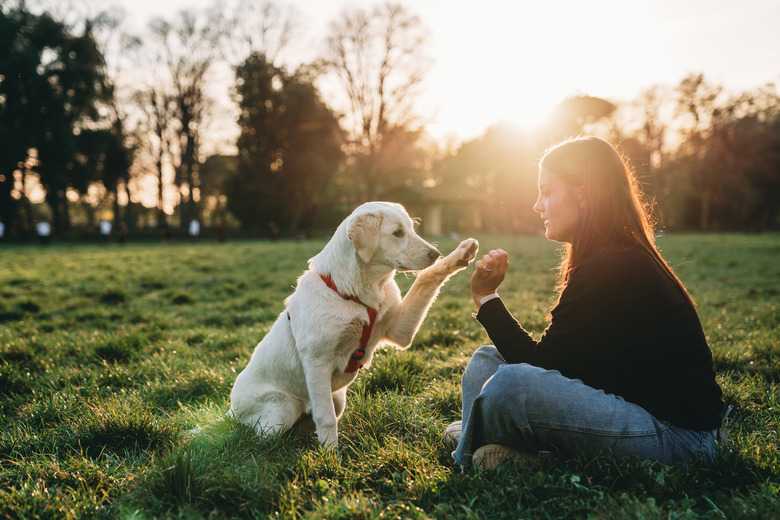
Clicker training is a method of training that involves using a clicker to mark and reward desired behaviors. Instead of just saying "good boy" and trying to shove a treat in your dog's mouth at the exact second he does what you want him to do, you use the sound generated by the clicker to "mark" the moment when the dog does what you wanted him to do, and then offer a reward (usually a treat).
Because the dog will come to associate the sound of the click with the reward that follows, the clicker lets you hone in on the exact moment that you're rewarding, which makes it clear to your dog what you want from them.
More Like This
DogsHow To Use a Clicker on a Walk With Your Dog
DogsHow to Teach Your Dog The 'Peek-a-Boo' Trick
CatsTikTok is Wild About the Treat and Train Remote Food Dispenser
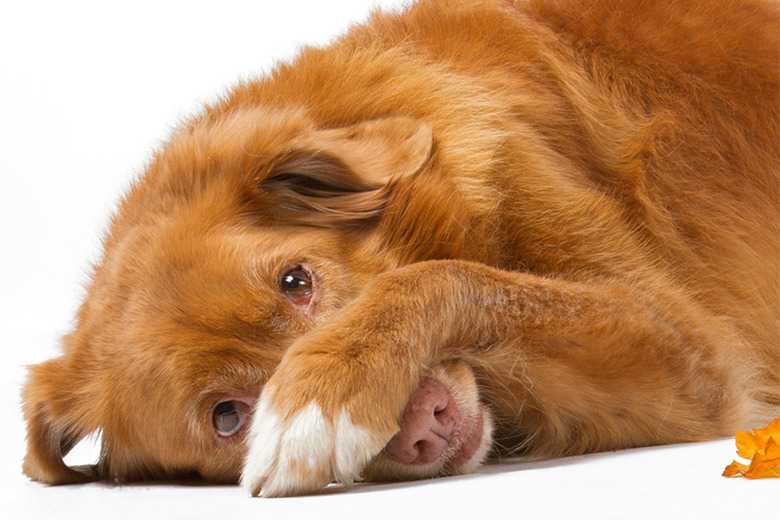
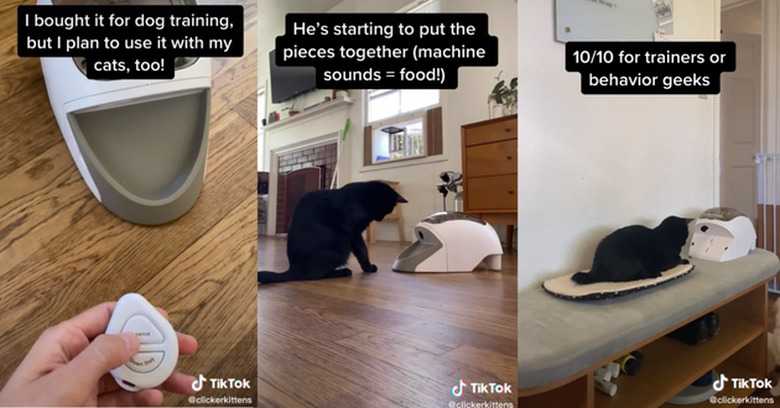
This article focuses on clicker training for dogs, but clicker training works with almost any pet (and really any animal). You can also use clicker training to teach your cat fun tricks and useful behaviors!
Tips for successfully clicker training your dog
Tips for successfully clicker training your dog
If you've decided to clicker train your dog, there are some things to keep in mind. Here are some helpful tips to make your experience clicker training your dog as productive as possible.

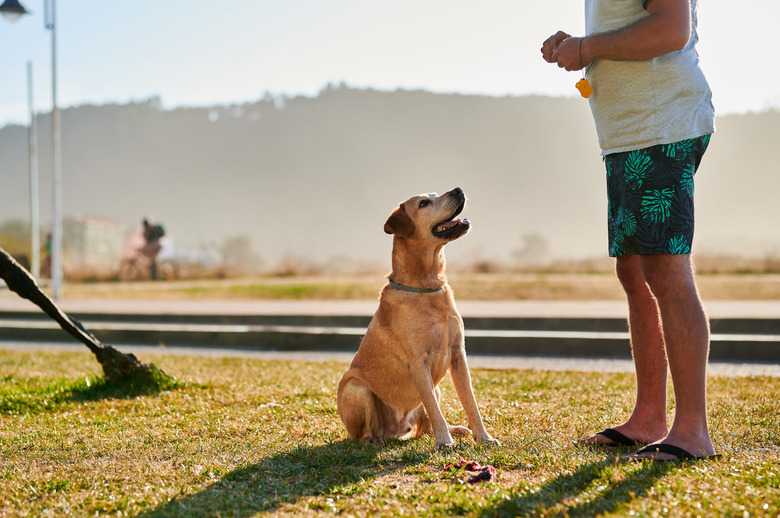
- Think of it like you're taking a picture: If you're having trouble with the timing of the click, think of it like the snap of a camera. Imagine that you're taking a picture of your dog in the exact moment when he performs the behavior you're looking for. If you're asking for a sit, click at the exact second when your pup's butt hits the ground, for example.
- But whatever you do, make sure you click at the right moment: Even if the "taking a picture" metaphor doesn't work for you, make sure you get the timing right. If you click too early or too late, your dog will associate the click (and the treat that comes later) with the wrong behavior, which ruins the point.
- Train in a quiet place: Quiet places with as few distractions as possible are ideal for any kind of training, but they're pivotal in clicker training, which depends on your dog, you know, hearing the click.
- Only click once per correct behavior: You don't need to click more than once, even if you want to give him more than one treat (like if he does a longer stay than he's ever done before, for example). Just click once and shower with praise and treats.
- You can also use a marker word instead of a clicker, if you prefer. Choose one short word (most people use "yes!") and say it in the same enthusiastic tone every time. Use this word the same way you would a clicker. This can come in handy if you're out with your dog and not currently in a session dedicated to clicker training. You'll definitely want to continue to use your clicker for training sessions, and training them to understand your marker word of choice can continue positive reinforcement while out and about.
Why does clicker training work?
Why does clicker training work?
In a word: science.
Behavioral science, on a basic level, has found that behaviors that are rewarded will continue. Or, as Psychology Today put it, "any behavior that is rewarded will be strengthened and the likelihood that it will appear will increase, while any behavior that is not rewarded will be weakened and the likelihood that it will appear will decrease."
Clicker training takes advantage of this basic principle of behavioral science by making it easier for the dog to connect the desired behavior with the reward you give him. This results in a quicker acquisition of new skills for your pup and a quicker path to the joy of a well-trained dog for you.
What equipment do I need to start clicker training?
What equipment do I need to start clicker training?
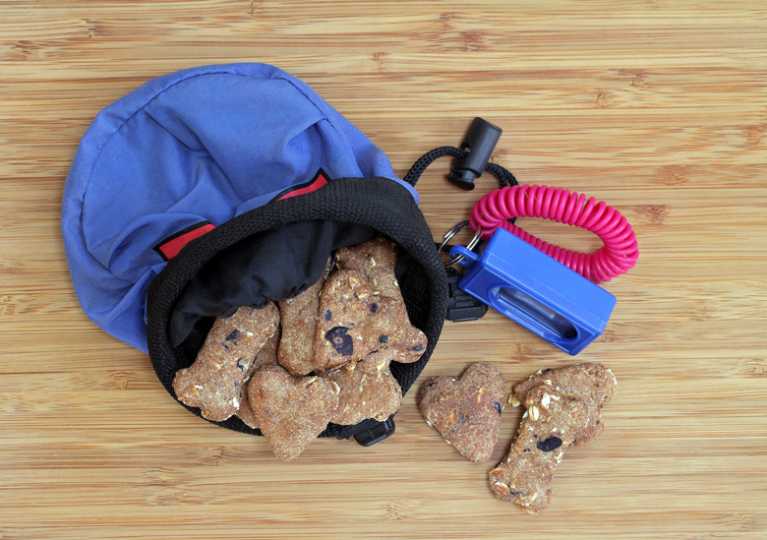
This one is easy. Clickers are super cheap—you can get a five-pack on Amazon for just $8. Or you can choose to make your own clicker. Other than that, all you need is a bag of your dog's favorite training treats (either small training-specific treats or larger treats that you're able to break up into smaller pieces—you don't want to overfeed your dog while training), a small treat bag that clips onto your belt, and plenty of time and patience.
As mentioned above, you also don't have to use a clicker. It's ideal to have a clicker for dedicated training sessions, but you can also use a verbal marker (such as "yes!") for any spontaneous training moments. Don't let the clicker itself scare you away!
Charging the clicker
Charging the clicker
"Charging the clicker" refers to the process of making your dog associate the sound of the click with a treat. Here's how to charge the clicker:
- Settle in to hang out with your dog, preferably at a time when you're alone. Have a bag of treats and your clicker handy.
- When you're ready to get started, click your clicker and immediately throw your dog a treat. He'll probably look at you at the sound of the click, even if this is your first time charging the clicker. This process is known as click and treat (C&T for short).
- Wait until your dog has lost interest in you before you C&T again.
- C&T randomly for several minutes. It's important to make sure that your dog is doing something different every time you click during a charging session though, otherwise, he might start to associate the click with a specific behavior, which is not what you want. The only focus now is to get him to associate the click with the treat.
- Make sure you C&T at least 20 times before you pack up for the session.
- Wait at least two hours, but then do another charging session.
Watch out for these common mistakes when clicker training
Watch out for these common mistakes when clicker training
There are a couple of common mistakes that people tend to make when they first start clicker training:
Clicking without treating
When you begin a clicker training session with your dog, make sure you have plenty of treats on hand. Whenever you click, immediately offer your dog a very small food treat. Especially in the first months of training, never make the click sound without giving your dog an instantaneous reward. By always accompanying the click with a treat, you can motivate your dog to listen for the clicker and cooperate more closely with you. If you fail to offer your dog a treat reward, he may become disinterested or begin to disassociate the noise with positive reinforcement.
Sending mixed messages
The key principle of clicker training is positive reinforcement. If you combine clicker training's positive reinforcement with negative correction (saying "no" or giving a correction on the leash), your dog will likely feel confused and unsure of how he ought to proceed. Instead, be consistent in your training methods to make the training process as simple to understand as possible.
In summary
In summary
As with any dog training, make sure your training sessions are no longer than 15 minutes, and stop if your dog seems anxious or distressed. Always give your dog lots of praise and pets at the end of a session, and remember: take your time, don't be afraid to repeat lessons until you're certain your dog has understood and mastered the concept, and be patient!
Happy clicking!
References
- AKC: Mark and reward: Using clicker training to communicate with your dog
- Psychology Today: Is there something special about clicker training for dogs?
- The Labrador Site: 5 tips to charging the clicker